Prime US REIT IPO Prospectus and Summary

  • Post author:

Overview of Prime US REIT

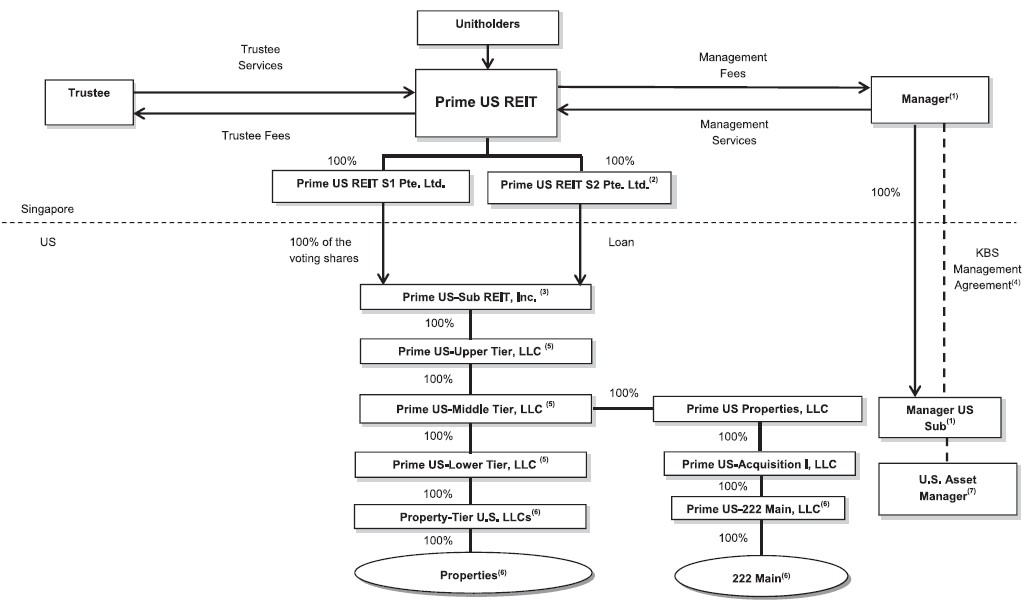
Prime US REIT is a Singapore REIT established with the principal investment strategy of investing, directly or indirectly, in stabilised income-producing office assets, and real estate related assets, in the United States of America (“U.S.”).

Prime US REIT’s key objectives are to provide Unitholders with regular and stable distributions and to achieve long-term growth in distribution per Unit (“DPU”) and net asset value (“NAV”) per Unit, while maintaining an appropriate capital structure.

The initial portfolio of Prime US REIT (the “IPO Portfolio”) consists of 11 office properties (the “Properties”) located across the United States, with an Appraised Value of US$1,222 million and an aggregate NLA of 3.4 million sq ft. The aggregate purchase consideration payable by Prime US REIT for the IPO Portfolio is US$1,222 million.


Prime poised to be third US-focused REIT to list on SGX Mainboard in 2019

Read more at: https://www.dealstreetasia.com/stories/prime-us-reit-sgx-mainboard-142301/


  • Type = US Office (Class A)
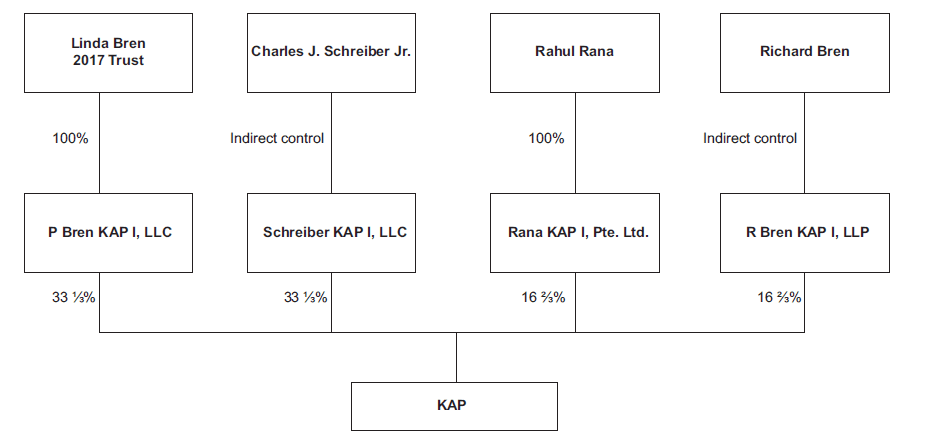
  • Sponsor = KBS Asia Partner Pte Ltd
  • Total Units Offered = 335,203,200
  • Portfolio = 11 Freehold Class A Office
  • Portfolio Size = US$1.23 Billion
  • IPO Offer Price = US$0.88
  • NAV per unit = US$0.84
  • Price / NAV = 1.0476
  • Distribution Yield = 7.4% (2019), 7.6% (2020)
  • Distribution Policy = 100% for 2019 & 2020. At least 90% thereafter. Semi Annual Payout.
  • Occupancy Rate = 96.7%
  • WALE = 5.5 Years
  • Gearing Ratio = 37.0%
  • WADM = 5.6 Years
  • Offer Closing Date: July 15, 2019, 12pm
  • Listing Date: July 19, 2019, 2pm
  • Prime US REIT IPO Prospectus


Compared to Manulife US REIT IPO

Compare to other Singapore REITs here.


Continue ReadingPrime US REIT IPO Prospectus and Summary

Singapore REIT Fundamental Analysis Comparison Table – 1 July 2019

  • Post author:

Technical Analysis of FTSE ST REIT Index (FSTAS8670)

FTSE ST Real Estate Investment Trusts (FTSE ST REIT Index) broke out from the 10 years resistance at 875 with significant increase in trading volume. The REIT index increased from 858.67 to 916.95 (+6.78%) and  as compared to last post on Singapore REIT Fundamental Comparison Table on June 3, 2019.

The REIT index is entering in an uncharted territory after breaking new high and may head towards to 1000 points based on projection of 161.8% Fibonacci level. Based on the current chart pattern and and momentum,  the sentiment is BULLISH and the trend for Singapore REIT direction is still UP. However, the REIT index may go for a short term pause before moving higher.


Fundamental Analysis of 39 Singapore REITs

The following is the compilation of 39 REITs in Singapore with colour coding of the Distribution Yield, Gearing Ratio and Price to NAV Ratio. This gives investors a quick glance of which REITs are attractive enough to have an in-depth analysis. The 2 new IPO ARA US Hospitality Trust and Eagle Hospitality Trust are not included in this table due to insufficient data points.

  • Price/NAV increases from 1.02 to 1.07 (Singapore Overall REIT sector is over value now).
  • Distribution Yield decreases from 6.51%  to 6.22% (take note that this is lagging number). About 33.3% of Singapore REITs (13 out of 39) have Distribution Yield > 7%.
  • Gearing Ratio remains at 34.9%. 22 out of 39 have Gearing Ratio more than 35%. In general, Singapore REITs sector gearing ratio is healthy. Note: The limit of gearing ratio for REITs listed in Singapore Stock Exchange is 45%.
  • The most overvalue REIT is Parkway Life (Price/NAV = 1.64), followed by Ascendas REIT (Price/NAV = 1.52), Keppel DC REIT (Price/NAV = 1.59) and Mapletree Industrial Trust (Price/NAV = 1.48), Mapletree Logistic Trust (Price/NAV = 1.36), Frasers Logistic & Industrial Trust (Price/NAV = 1.33) and CapitaMAll Trust (Price/NAV = 1.31)
  • The most undervalue (base on NAV) is Fortune REIT (Price/NAV = 0.65), followed by OUE Comm REIT (Price/NAV = 0.71) and Far East Hospitality Trust (Price/NAV = 0.78).
  • The Highest Distribution Yield (TTM) is Sasseur REIT (8.59%) ,  followed by First REIT (8.35%), SoilBuild BizREIT (8.39%),  Cromwell European REIT (8.54%) and Lippo Mall Indonesia Retail Trust (8.04%).
  • The Highest Gearing Ratio are ESR REIT (42.0%), Far East HTrust (39.9%) and OUE Comm REIT (39.4%) and SoilBuild BizREIT  (39.3%)
  • Top 5 REITs with biggest market capitalisation are Ascendas REIT ($9.7B), CapitaMall Trust ($9.7B), Capitaland Commercial Trust ($8.1B), Mapletree Commercial Trust ($6.0B) and Mapletree Logistic Trust ($5.7B)
  • The bottom 3 REITs with smallest market capitalisation are BHG Retail REIT ($354M), Sabana REIT ($484M) and iREIT Global REIT ($485M)

Disclaimer: The above table is best used for “screening and shortlisting only”. It is NOT for investing (Buy / Sell) decision. To learn how to use the table and make investing decision, Sign up next REIT Investing Seminar here to learn how to choose a fundamentally strong REIT for long term investing for passive income generation


  • 1 month decreases from 1.88538% to 1.88450%
  • 3 month decreases from 2.00338% to 2.00192%
  • 6 month decreases from 2.06215% to 2.06017%
  • 12 month remains at 2.18675%

Based on current probability of Fed Rate Monitor,  the probability of keeping the interest rate at 2.25-2.50% is 0%! This means US Fed Reserve may cut cut the interest rate of 50 bps to 1.75-2.00% by end of this year!

Summary

Fundamentally the whole Singapore REITs is over value now based on simple average on the Price/NAV. The big cap REITs are getting quite expensive and the distribution yield are not so attractive currently. Most of the DPU yield for big cap REIT is below 5% now. The yield spread between big cap and small cap REIT remains wide. This indicates value picks only in small and medium cap REITs.

Yield spread (reference to 10 year Singapore government bond of 2.015%) has tightened from 4.448% to 4.205%. DPU yield for a number of small and mid-cap REITs are still very attractive  (>8%) at the moment.  Some small and medium size REITs are starting to move up due to attractive risk premium compared to big cap REITs.

Technically, the REIT index is trading in a bullish up trend. This bullish sentiment may probably push the index further up supported by an increasing trading volume caused by the institutional fund inflow into Singapore REITs. In addition, Singapore REITs may take advantage of the low interest rate environment to take on more debt to grow the current portfolio.


If you need an independent professional review on your current REIT portfolio and need any recommendation, you may engage me in the REIT portfolio Advisory. REITs Portfolio Advisory.  https://mystocksinvesting.com/course/private-portfolio-review/


Continue ReadingSingapore REIT Fundamental Analysis Comparison Table – 1 July 2019

Replies to Unanswered Questions for REITs Symposium Panel

  • Post author:

This article appears on Inside Invest.

https://www.insideinvest.com.sg/investing-trading/2019/05/27/replies-to-unanswered-questions-for-reits-symposium-panel/

Both of the panel discussions at REITs Symposium 2019 were so well-received that many of the good questions sent in by the audience had to be sacrificed due to time constraints.

In appreciation of your overwhelming support, however, we picked up some of your unanswered questions and reached out to Kenny Loh, one of our invited panellists of the day to share his views with us. Enjoy!


What drives a REIT’s long-term price appreciation? Increased capital inflows (investor interests) or appreciation of its underlying assets?

The share price of a REIT is driven by both the increase in DPU and also the appreciation of the NAV. The value of the property and rental income will go up in the long term because REIT investment is inflation hedged, as long as the REIT is well managed.


Properties for older REITs are ageing. Moving forward, will more money be required to upkeep properties, thus reducing distributions to unit holders?

It is true that REITs need to spend more maintenance costs to upkeep the aging properties. However, a good REIT manager has the options to do AEI to revitalise the building or sell the older building away and replace it with a newer one. All these actions may help the REIT to enhance its DPU.


Should we avoid REIT ETF because of the tax issues it attracts, in contrast to holding pure REITs?

Tax concessions have been extended to REIT ETFs, ensuring parity in tax treatments between investing in individual S-REITs and REIT ETFs. https://www.businesstimes.com.sg/stocks/singapore-budget-2018/singapore-budget-2018-reit-etfs-to-enjoy-tax-transparency


What are the key risks of investing in a REIT?

REIT is sensitive to economic cycles and interest cycle as the underlying asset is real estate. Real estate has its own investment cycle. Investors should not put 100% investment in real estate sectors or REITs. It is advisable for investors to diversify their investments into different asset classes with minimal correlation.


How to avoid value traps in REITs?

Investors should not make investment decisions purely by looking at the numbers. Qualitative analysis, Macro Economy Analysis and Risk Assessment are important analytical steps to avoid value traps.


What are some of the red flags that we, as retail investors should look out for when we do our homework/analysis on the suitable REITs to buy/hold?

Retail investors are always dependent on the free information available on the internet for research. Those data or news are lagging or old news. Investors need to do more qualitative analysis instead of focusing too much on the financial numbers which can be subjected to financial engineering. Most retail investors cannot differentiate between fact, opinion, noise or rumours in their analysis. The more they read, the more they are confused.


Given that REITs do have many restrictions, e.g.: 90% pay-out, 45% gearing and are relatively secured, do you advise using leverage through margin financing to enhance yield?

Leverage if used correctly can enhance the return. Vice versa, investors will face huge financial burden due to margin call when used wrongly. It is very important for investors to seek qualified and unbiased professional advice which is free from conflict of interest before doing any margin financing.


Kenny Loh is a Senior Consultant and REITs Specialist of a Singapore’s top Independent Financial Advisor. He helps clients construct diversified portfolios consisting of different asset classes from REITs, Equities, Bonds, ETFs, Unit Trusts, Private Equity, Alternative Investments and Fixed Maturity Funds to achieve an optimal risk adjusted return. Kenny is also a CERTIFIED FINANCIAL PLANNER. He has won multiple awards in financial planning and investment planning.

Continue ReadingReplies to Unanswered Questions for REITs Symposium Panel