My Personal Investment Journey with Kenny

  • Post author:

Tam Ging Wien


My name is Tam Ging Wien; most people call me Wien for short. I have been investing for the last 15 years – or perhaps you could better say I was gambling in the early days as most of my early years of stock investing experience have been lost making. I could not understand why I kept losing money while people around me prospered. I did not understand how some people could consistently pick winners while I kept holding on to losers.

I couldn’t take it anymore, my hard earned money was like sand slowly draining away; slipping through the gaps my fingers. The more I tightened my grip, the more I lost. I finally mustered the courage to admit that I did not know what I was doing. I sold all my holdings and mentally wrote-off my losses.

I avoided the stock market for a number of years; but not because I fear losing money, but because I knew I first had to learn the right skills. I started seeking out mentors who could guide me on the right path. I attended any free talks and seminars that I could find on money management and stocks. I went through many books on investments. I surfed the internet for learning resources.

In 2012, I met Kenny Loh (aka Marubozu) through his course entitled “How to Pick Singapore REITs for Dividend Investing“. I had little capital then and could not afford expensive courses offered in the thousands. Kenny’s course was affordable and I decided to sign-up for the full day course.

To my surprise, despite the affordability his course has, it was not short on content. His class was engaging and easy to understand – he has a way of distilling down complex concepts so that a beginner like me could easily understand and immediately apply the concepts in my own investments.

Throughout the course, Kenny was very generous in his sharing and has always made an effort to answer all my queries. I certainly had many! He was patient and made sure every student understood the question before answering it. In fact, I even had questions after the class – sometimes many months after attending his course and Kenny still answers them even till today! Sometimes when I felt I needed a refresher, I would sign-up for Kenny’s course again.

Thanks to Kenny, I finally acquired the foundational skill set and gained the confidence I needed to restart my investing journey. Using the techniques I had learnt from Kenny and scraps I put together from my savings, I finally made my first investment after many years of avoiding the stock market. And what was the REIT I invested in? First REIT at a price of $1.05!

I was fortunate enough to have caught an uptrend wave when I invested – just months after my initial investment, the price soared netting me significant gains including the dividends earned. Again, using the same techniques Kenny thought, I concluded the REIT was overvalued and I sold close to the high. Fortunately, for me, a major correction soon ensued in the REIT markets. Again, with the skill sets I acquired from Kenny, the confidence I gained and the increased capital available, I reinvested them all back into various REITs in 2013 and 2014. Many of the REITs I still hold today came from the investments made during the period and repeatedly taking advantage of corrections to increase my shareholdings.

In 2016, I decided that I have gained enough knowledge and experience in REITs and decided to contribute back to the society by sharing my knowledge openly. I started documenting the numerous skill sets I have learnt both from Kenny and from my own experiences and eventually published my first investment book entitled “REITs to Riches: Everything You Need to Know About Investing Profitably In REITs” (ISBN 978-981-11-43182) in 2017.
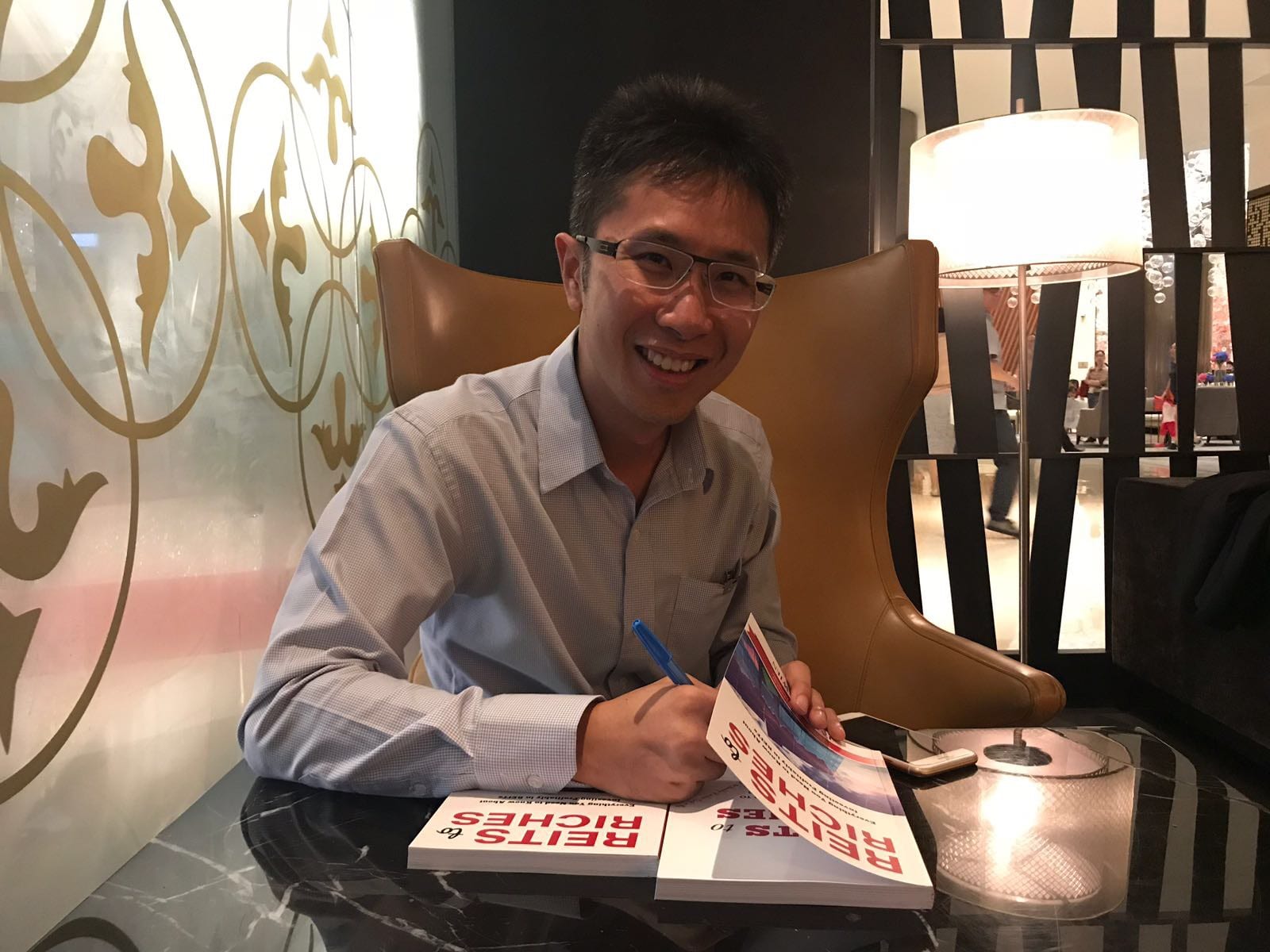

This whole experience thought me that when it comes to anything in life, including investments in stocks and REITs, the first thing that really matters is the desire, attitude, mindset and a dedicated mentor to guide you towards your goals.

With the right mindset and a dedicated mentor, the rest still follow. And best of all, it doesn’t matter what your background is; you don’t need to be financially trained. If I myself have no formal education in finance; yet able to learn these investing skills from Kenny so can you.

I hope that my investing journey has inspired you and hope that you will join me and numerous others who have already benefited many times over from the invaluable lessons that Kenny has to offer.

God Bless!
Continue ReadingMy Personal Investment Journey with Kenny

Singapore REIT Fundamental Analysis Comparison Table – 3 Oct 2017

  • Post author:

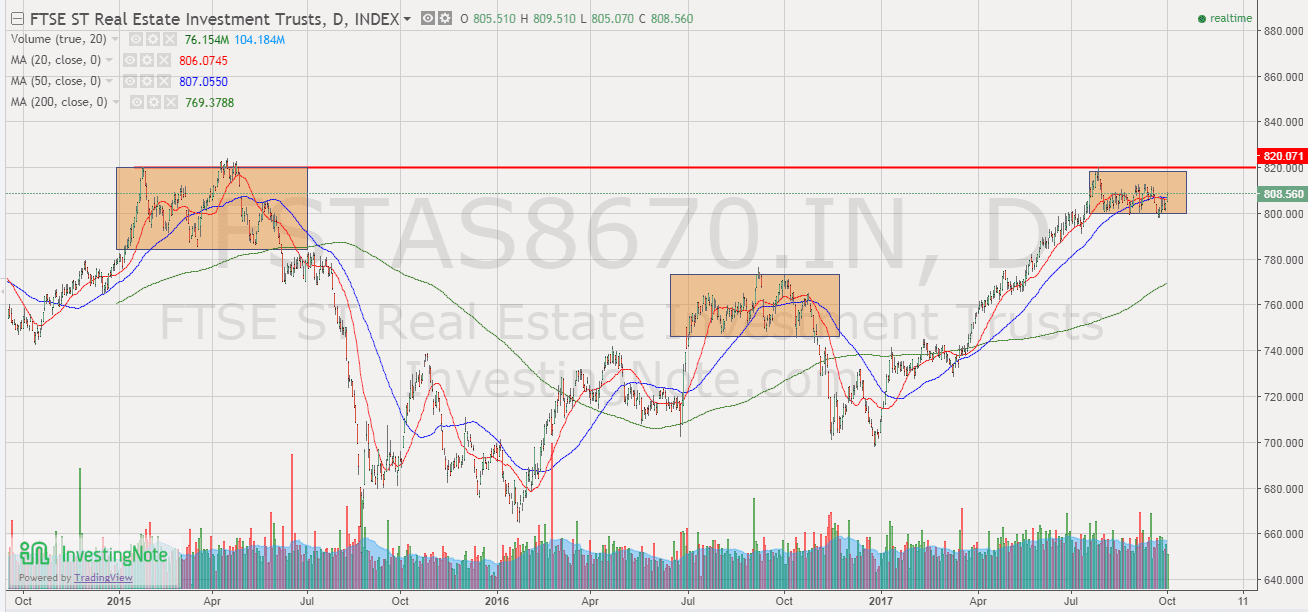
FTSE ST Real Estate Investment Trusts (FTSE ST REIT Index) decreases from 810.27 to 806.78 (-0.43%) ( compare to last post on Singapore REIT Fundamental Comparison Table on Sept 3, 2017.  The index is currently facing resistance of 820 and currently trading sideway. We have to watch for the potential reversal as currently 20D and 50D are trending horizontally. Breaking the critical support of 800 will kick start the correction of Singapore REITs index.


Fundamental Analysis

  • Price/NAV decreases from 1.05 to at 1.04 (Singapore Overall REIT sector is slightly over value now).
  • Distribution Yield increases from 6.51% to 6.53% (take note that this is lagging number). About one third number of Singapore REITs (11 out of 37) have Distribution Yield > 7%. This is a significant drop in numbers compare to a few months ago. This indicates there are lesser Singapore REITs with attractive yield to pick now.
  • Gearing Ratio remains at 34.7%.  20 out of 37 have Gearing Ratio more than 35%. In general, Singapore REITs sector gearing ratio is healthy.
  • Most overvalue REIT is Parkway Life (Price/NAV = 1.62), followed by Keppel DC REIT (Price/NAV = 1.43), First REIT (Price/NAV = 1.33), Mapletree Industrial Trust (Price/NAV = 1.34) and Ascendas REIT (Price/NAV = 1.31)
  • Most undervalue (base on NAV) is Fortune REIT (Price/NAV = 0.68),  followed by Far East HTrust (Price/NAV = 0.75) and Keppel REIT (Price/NAV = 0.84) and OUE Com REIT (Price/NAV = 0.83).
  • Highest Distribution Yield (TTM) is Cache Logistic Trust (8.74%), followed by SoilBuild BizREIT (8.46%), Lippo Mall Indonesia Retail Trust (8.19%) and iREIT Global REIT (7.95%).
  • Highest Gearing Ratio is Cache Logistic Trust (43.4%), iREIT Global (41.3%).

Disclaimer: The above table is best used for “screening and shortlisting only”. It is NOT for investing (Buy / Sell) decision. To learn how to use the table and make investing decision, Sign up next REIT Investing Seminar here to learn how to choose a fundamentally strong REIT for long term investing for passive income generation.


Economy Analysis – Singapore

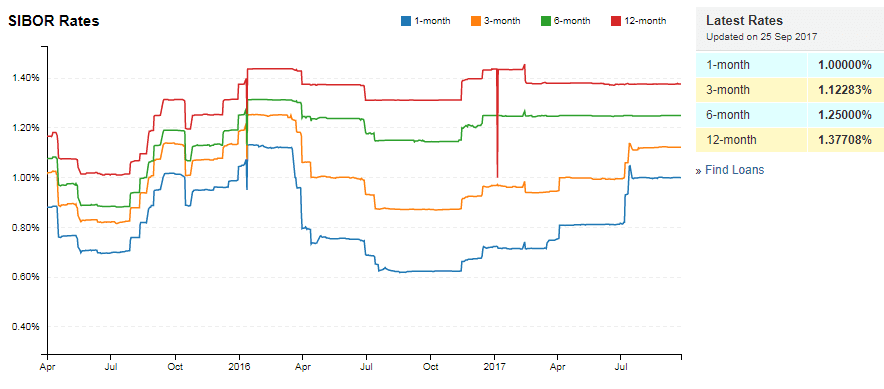
  • 1 month increases from 0.99900% to 1.00000%
  • 3 month increases from 1.11175% to 1.12283%
  • 6 month increases from 1.24800% to 1.25000%
  • 12 month increases from 1.37658% to 1.37708%


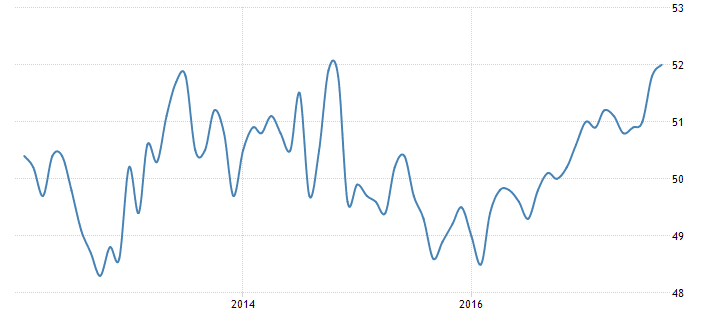
The Singapore Manufacturing PMI increased to 52 in September 2017 from 51.8 in the previous month. The reading pointed to the fastest pace of expansion in the manufacturing sector since April 2011, boosted by growth in new orders, new exports, output and employment. The PMI for the electronics sector rose 0.4 points to 53.6 in September, also the highest in more than six years. Manufacturing PMI in Singapore averaged 50.19 from 2012 until 2017, reaching an all time high of 52 in September of 2017 and a record low of 48.30 in October of 2012.


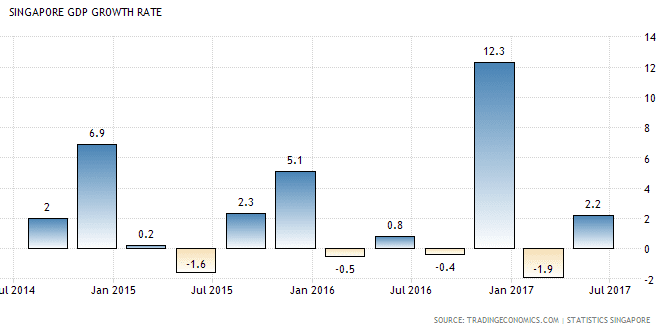
The Gross Domestic Product (GDP) in Singapore expanded 2.20 percent in the second quarter of 2017 over the previous quarter. GDP Growth Rate in Singapore averaged 6.78 percent from 1975 until 2017, reaching an all time high of 37.20 percent in the first quarter of 2010 and a record low of -13.50 percent in the fourth quarter of 2008.


Summary

Fundamentally the whole Singapore REITs is slightly over value. Office and Hospitality sectors are still undervalue but have not seen any clear turnaround signs yet. Technically Singapore REITs is currently facing the resistance of 820 and will turn to medium term bearish if 800 support is broken. This correction may present a great opportunity to accumulate REITs as the Singapore economy fundamental is strengthening.

This is the time we have to start to do homework and wait for the correction to plan the entry.  I will be sharing how to find the fundamental strong REITs and how to time the entry in my Investing in Singapore REIT course here.

If you do not have time to do all the analysis and monitor the stock market, there is a solution for you … REITs Portfolio Advisory. I will help you to build a Diversified REITs portfolio for you. I will do all the work by selecting fundamental strong REIT, time the entry, monitor the quarterly earning performance, sell the weak REITs, etc.  https://mystocksinvesting.com/course/private-portfolio-review/

See all other relevant  Singapore REITs blog posts here.

Check out coming seminars at https://mystocksinvesting.com/events


Continue ReadingSingapore REIT Fundamental Analysis Comparison Table – 3 Oct 2017

How do I plan my retirement using CPF Life?

  • Post author:

Jocelyn Goh,  AFPCM

As a middle-age working mother in my late 40s, there are 2 main things that is always on my mind, having sufficient funds to support my kids tertiary education and retiring comfortably at age 60 or earlier.

As a first step, I have looked at the CPF Retirement Account (RA) which will be available at age 55. CPF will automatically transfer all funds from our Special Account (SA) and Ordinary Account (OA) to the Retirement Account on our 55th birthday.

Depending on the amount available in the RA, a CPF member should fall into one of these categories.

  • Basic Retirement Sum (BRS)
  • Full Retirement Sum (FRS)
  • Enhanced Retirement Sum (ERS)

As a Singapore citizen, I will automatically be enrolled in CPF Life Scheme, as long as there is a minimum sum of $60,000 in the RA. This also applies to Permanent Resident of Singapore. There are 2 CPF life plans, standard plan provides members with higher monthly payouts but lower bequest for member’s beneficiaries. Basic plan is the direct opposite.

The estimated monthly payout will be as follows:-

The CPF Life scheme should be able to supplement our living expense partially if not in full, depending on your desired lifestyle. Not forgetting, this monthly payout has not been adjusted to include the effect of inflation over the years.

The table below will give you an idea of what to expect at age 55 depending on your current contribution. You can adjust the figures accordingly and also take into consideration the minimum sum maybe increased in years to come.

** For simplicity and on the conservative side, I have assumed the following   :-

  • Zero balance in Ordinary Account at age 55
  • Constant yearly Special Account contribution before age 55
  • yearly interest rate @4%

I am expecting my monthly expense to be about S$3000 when I reach 65, and therefore the CPF life plan will not be sufficient. I have started to plan and have been actively looking for different options to supplement the shortage.

For those who are non-risk taker, topping up the SA account can be considered as CPF interest rate is quite attractive at the moment. Getting another annuity plan from other sources is also a safe and secured way. For myself, I am taking a little more risk and have started investing in bonds and funds that can give me a higher return of between 5% to 7% yearly.

During retirement you can access the equity in your home by applying for a reverse mortgage, which will not add bills to your bill stacks throughout the year. Instead, a reverse loan, also called a home equity conversion mortgage, will ensure that you receive checks in the mail from your reverse mortgage lender each month for a set time period or until you have used up the available home equity. In addition to the monetary benefit of taking out a reverse loan of this sort as a retiree you will also be able to enjoy flexibility as to how you spend the money and remain secure in the knowledge that you cannot be evicted from your home for non-payment as you could be if you had a standard home loan.


Planning ahead for retirement is the key, and I have only started in the recent years, a bit late though. My advice is to start early, keep a lookout on CPF scheme changes and find out more by attending some free workshops/seminars for a start, if you are newbie.

Continue ReadingHow do I plan my retirement using CPF Life?