Does the No Vote in Italy’s Constitutional Referendum Mean Bad News for the Global Economy?

  • Post author:

Marcus TJ

italyIf you have not seen the Oscar-winning film The Big Short, you are missing out on a truly seminal movie. This vehicle narrates the tale of the sub-prime mortgage collapse in the U.S., which of course sparked the great recession and a global, economic decline. More specifically, it explores the actions of Wall Street trader Steve Eisman, who foresaw the collapse of the housing market and profited by betting billions against the banks holding onto mortgage assets.

Eisman made billions from this tactic and it is a philosophy that has continued to underpin his trades since essentially taking advantage of the natural fluctuations of the economy in the same way that forex and commodity traders operate. He remains tight-lipped about the precise derivatives and markets that he is expecting to plummet, of course, but recent trends and developments have made it clear that he has a prominent target in mind at present. With an estimated $25 billion having been withdrawn from hedge funds during the last three quarters (and given the continued plight of the Eurozone), continental Europe’s banks have emerged has an obvious target for Eisman and similar traders at present.

Why Italy’s Constitutional No Vote Could be the Trigger for Another Economic Collapse 

While these factors have been ongoing for a prolonged period of time, there are fears that the decision of the Italian electorate to reject Prime Minister’s Matteo Renzi proposals for constitutional reform. Perceived as an attempt to reduce the power and influence of the electorate, this has the potential to trigger widespread uncertainty and decline while it has already accounted for the resignation of Renzi himself.

With calls for a snap-election, Italy could follow the lead of the U.S. by voting in a popularist, anti-establishment party and candidate. The Five Star Movement has gained tremendous credibility in recent times as outgoing Prime Minister Renzi’s popularity has gradually declined, with this party’s main electoral pledge being to hold a referendum on Italy’s continued membership of the Eurozone. This, in turn, could have a huge impact on the vulnerable and increasingly fragmented Eurozone, while potentially triggered the break-up of the ailing single currency.

In truth the value and appeal of the Euro has been in decline ever since the Greek financial crisis first began, but the latest developments could be the trigger the total disintegration of the single, European block and a period of sustained economic decline across the globe.


The Bottom Line: What Will the Immediate Economic Impact be and Can it be Avoided? 

Italy’s recent veto of Renzi’s reform proposals has already caused national economic unrest, while further exacerbating the issues surrounding the European central banking crisis. It has also reduced the prospects of driving structural reform within the Italian government, causing a contraction in growth and pushing the nation further towards a recession. A departure from the Eurozone is unlikely to help in the longer-term, while this will also impact international trade by triggering a global economic decline.

The question that remains is can this fate be avoided?  A period of calm would undoubtedly help the economy to consolidate and then recover, while the election of a more conservative, technocrat would also ensure that Italy remained in the Eurozone for the foreseeable future. This would usually seem the most likely course of events, but the Brexit vote and the election of Donald Trump as U.S. President highlight a distinct trend for nationalist and popularist movements in the modern age.

Continue ReadingDoes the No Vote in Italy’s Constitutional Referendum Mean Bad News for the Global Economy?

How To Build A Profitable Investment Portfolio

  • Post author:

Investing is one of those things that everyone knows they should be doing. However, tons of people aren’t investing. The main reason for this is simple. At the end of the day, the average person simply doesn’t know how to build a profitable investment portfolio. So today, we’ll go over the steps to building a perfect investment portfolio from start to finish.

Image result for investment portfolio

Step #1: Think About Your Goals

The first step to building a strong and prosperous investing portfolio is to consider your goals. Ultimately, before you can create a portfolio that’s tailor fitted to you, you’re going to need to know what your needs are. Are you investing as a way to save for emergencies or save for retirement? If so, chances are that the moves you make will be different than the moves someone would make if they are looking to make investing their full time income. So, the first thing you’ll need to do is sit back and think about what you plan to accomplish when you start investing.

Step #2: Research Investment Vehicles

Now that you know what your goals are, it’s time to look into investing vehicles. The truth is that there are tons of them out there, each coming with their own risk/reward profile. Considering your goals, think about which investment vehicles will work best for you. For example, if your goal is to save for retirement, you’ll likely want to go the slow and steady, yet very safe route. This includes using a mixture of stocks and bonds. However, if you are looking to make investing your full time income, you may want to consider high risk, high reward investment vehicles like forex, retail binary options, and more along those lines.

Step #3: Research The Market

Now that you know what investment vehicle you’ll be using, it’s time to start doing your market research. Ultimately, your investment vehicle largely dictates the corner of the market you’ll find yourself in most often. So, considering your investment vehicle, start doing a bit of research to see what causes the corner of the market you’re interested in to move. After all, when you invest, your ultimate goal is going to be to make money off of these movements. By knowing what causes the movements, you will make more accurate predictions, leading to more profitability.

Step #4: Learn About Strategy

No matter what you’re doing in life, strategy is important. If you’re a mechanic, you may have a strategy for pulling the transmission out of a car. For investors, strategy is centered around two things. Ultimately, strategies are designed to reduce risk and increase profits. Some strategies will be created for those with a higher appetite for risk while others will be made for those with a lower appetite for risk. Nonetheless, there’s definitely going to be a few strategies out there that will work perfectly for your portfolio.

Step #5: Practice Your Theories

One big mistake that most beginner investors make is using their own money first. However, the old saying rings true…. practice makes perfect! Many brokers offer virtual accounts where you can test everything you’ve put together in the steps above using virtual money, not real dollars and cents! Us a virtual trading platform to test your theories and make sure that when you do start using real money in the real market, you’re making money, not losing it.

Step #6: Start Profiting

The final step is to take everything you’ve learned and compiled and throw money at it. Once your virtual account shows you that what you plan on doing will work, start investing with real money and making real profits!

Continue ReadingHow To Build A Profitable Investment Portfolio

Singapore REIT Fundamental Analysis Comparison Table – 5 December 2016

  • Post author:

FTSE ST Real Estate Investment Trusts (FTSE ST REIT Index) decreases from 730.39 to 722.05 (-1.14%) compare to last post on Singapore REIT Fundamental Comparison Table on Nov 5, 2016. The index is trading below the 200D SMA.  Take note that the 200D SMA is no longer sloping up and is currently flat. If the index continues to trade below 200D SMA and the 200D starts to slope down, the Singapore REIT sector will reverse to a confirmed down trend.  SGX S-REIT (REIT.SI) Index decreases from 1125.83 to 1111.15 (-1.30%).

ftse-st-reit-index-dec6-2016ftse-st-reit-index-6m-dec6-2016

  • Price/NAV decreases from  0.969 to 0.951 (Singapore Overall REIT sector is under value now) after recent sell off.
  • Distribution Yield increases from 7.07% to 7.22% (take note that this is lagging number). More than half of Singapore REITs (20 out of 39) have Distribution Yield > 7%. High yield REITs mainly from Hospitality Trust and small cap Industrial REIT. Selection of Singapore REITs have become much more important now because not all the high yield REITs has strong fundamental.
  • Gearing Ratio decreases from 35.15% to 35.09%.  24 out of 39 have Gearing Ratio more than 35%.
  • Most overvalue is Ascendas iTrust (Price/NAV = 1.623), followed by Parkway Life (Price/NAV = 1.476) and Keppel DC REIT (Price/NAV = 1.371)
  • Most undervalue (base on NAV) is Far East HTrust (Price/NAV = 0.634), followed by Sabana REIT (Price/NAV = 0.652) and Keppel REIT (Price/NAV = 0.745).
  • Highest Distribution Yield is Viva Industrial Trust (9.60%), Lippo Malls Indonesia Retail Trust (9.30%) followed by Sabana REIT (9.26%).
  • Highest Gearing Ratio is Croesus Retail Trust (44.6%), iREIT Global (42.5%), Sabana REIT (41.5%), Cache Logistic Trust (41.2%), Ascott REIT (41.0%) and OUE Commercial REIT (40.8%)

singapore-reit-fundamental-analysis-and-comparison-table-5-dec-2016

Disclaimer: The above table is best used for “screening and shortlisting only”. It is NOT for investing (Buy / Sell) decision. To learn how to use the table and make investing decision, Sign up next REIT Investing Seminar here to learn how to choose a fundamentally strong REIT for long term investing for passive income generation.


  • Singapore Interest Rate decreases from 0.12% to 0.07%

singapore-interest-rate-dec6-2016

singapore-sibor-dec6-2016

  • 1 month increases from 0.62417% to 0.67155%
  • 3 month increases from 0.87242% to 0.92538%
  • 6 month increases from 1.14530% to 1.21289%
  • 12 month increases from 1.31225% to 1.39817%

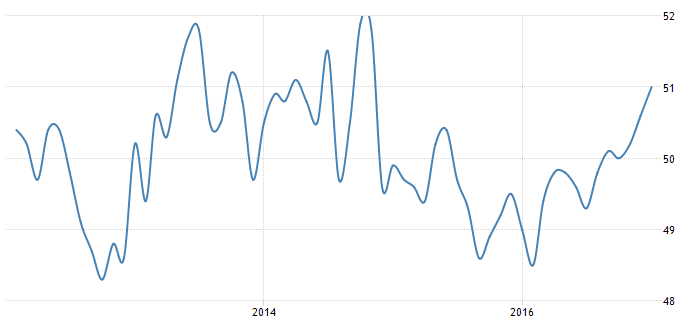
singapore-manufacturing-pmi-dec6-2016

Manufacturing PMI in Singapore increased to 50.20 in November from 50 in October of 2016. Manufacturing PMI in Singapore averaged 50.03 from 2012 until 2016, reaching an all time high of 51.90 in October of 2014 and a record low of 48.30 in October of 2012.

singapore-gdp-growth-rate-dec6-2016

The Singaporean economy contracted a seasonally-adjusted annualized 2 percent on quarter in the three months to September of 2016, compared to a 4.1 percent decline in preliminary estimates. Markets were expecting a 2.5 percent contraction. GDP Growth Rate in Singapore averaged 6.82 percent from 1975 until 2016, reaching an all time high of 37.20 percent in the first quarter of 2010 and a record low of -13.50 percent in the fourth quarter of 2008.


Singapore REITs in general is under value due the recent sell off after Donald Trump won the the US Presidential Election, and the market is anticipate a 80% probability of rate hike in Dec 2016. Distribution yield for some Singapore REITs with bigger market capitalization has become a little bit more attractive again. Should there be any knee jerk reaction if Janet Yellen announces the rate hike next week, it is a good opportunities to pick up some fundamental strong REIT.

Technically Singapore REITs sector is in bearish territory after breaking down the 200D SMA support. We need to wait for the Singapore REIT Index to find the support after FOMC meeting next week to plan the entry. Happy hunting but don’t hunt the wrong one!

Original post from https://mystocksinvesting.com

Check out coming seminars at https://mystocksinvesting.com/events


Continue ReadingSingapore REIT Fundamental Analysis Comparison Table – 5 December 2016