Singapore REITs Monthly Update (November 23rd, 2025)

  • Post author:

Technical Analysis of FTSE ST REIT Index (FSTAS351020)


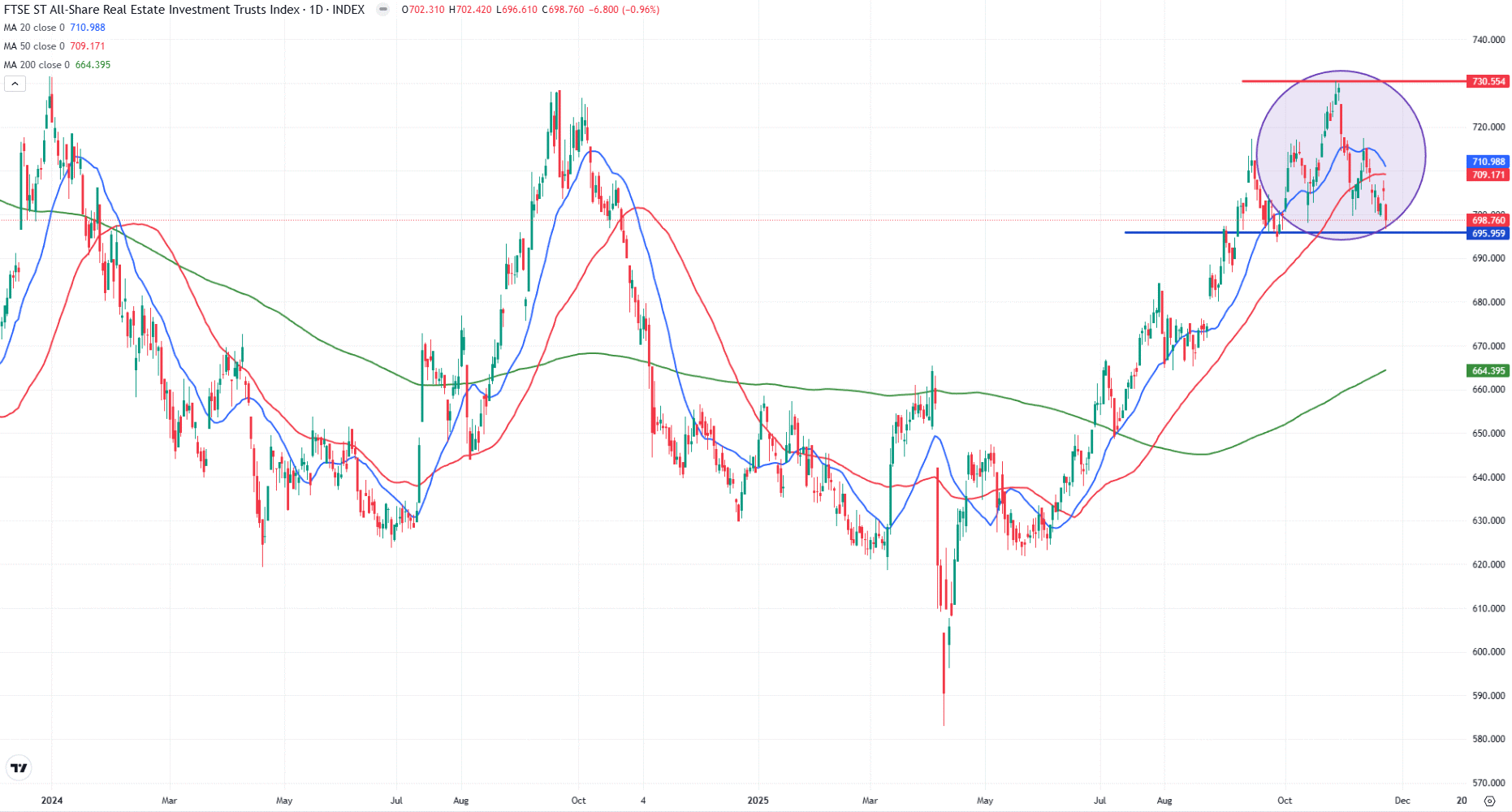
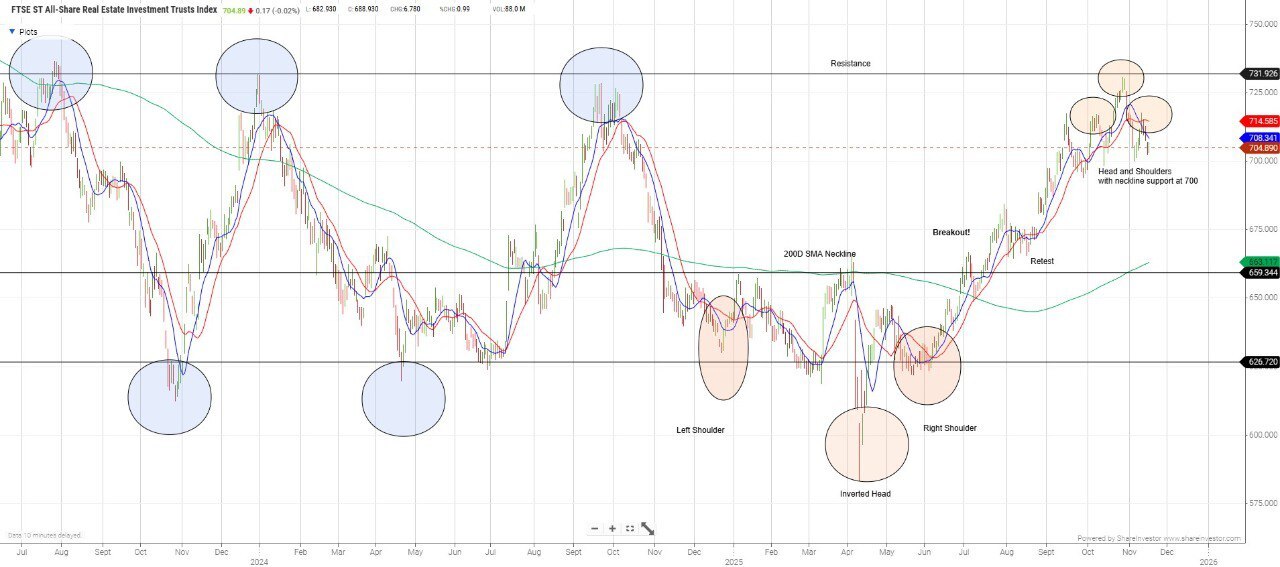
FTSE ST Real Estate Investment Trusts (FTSE ST REIT Index) decreased from 710.29 to 698.76 (-1.62%) compared to last month’s update. Over the past two months since October, the REIT Index has formed a head-and-shoulders pattern, with the head peaking at 731. This pattern often indicates a potential trend reversal. If the index breaks below the key support at 696, it may trigger a deeper pullback and potentially mark the beginning of a downtrend. On the upside, the resistance level of about 731 has been tested again for the 3rd time, firstly in Jan 2024 and secondly in Sep 2024. A breakout above this level could allow the index to retest and possibly exceed levels last seen in July 2023.

  • Short-term direction: Down
  • Medium-term direction: Sideways
  • Long-term direction: Up
  • Immediate Support: 696 (line)
  • Immediate Resistance: 731 (line)
chart-Nov-23-2025-09-20-15-0062-AM

FTSE REIT Index Chart (2 years)

Previous chart on FTSE ST REIT index can be found in the last post: Singapore REIT Fundamental Comparison Table on October 19th, 2025.

Fundamental Analysis of 39 Singapore REITs


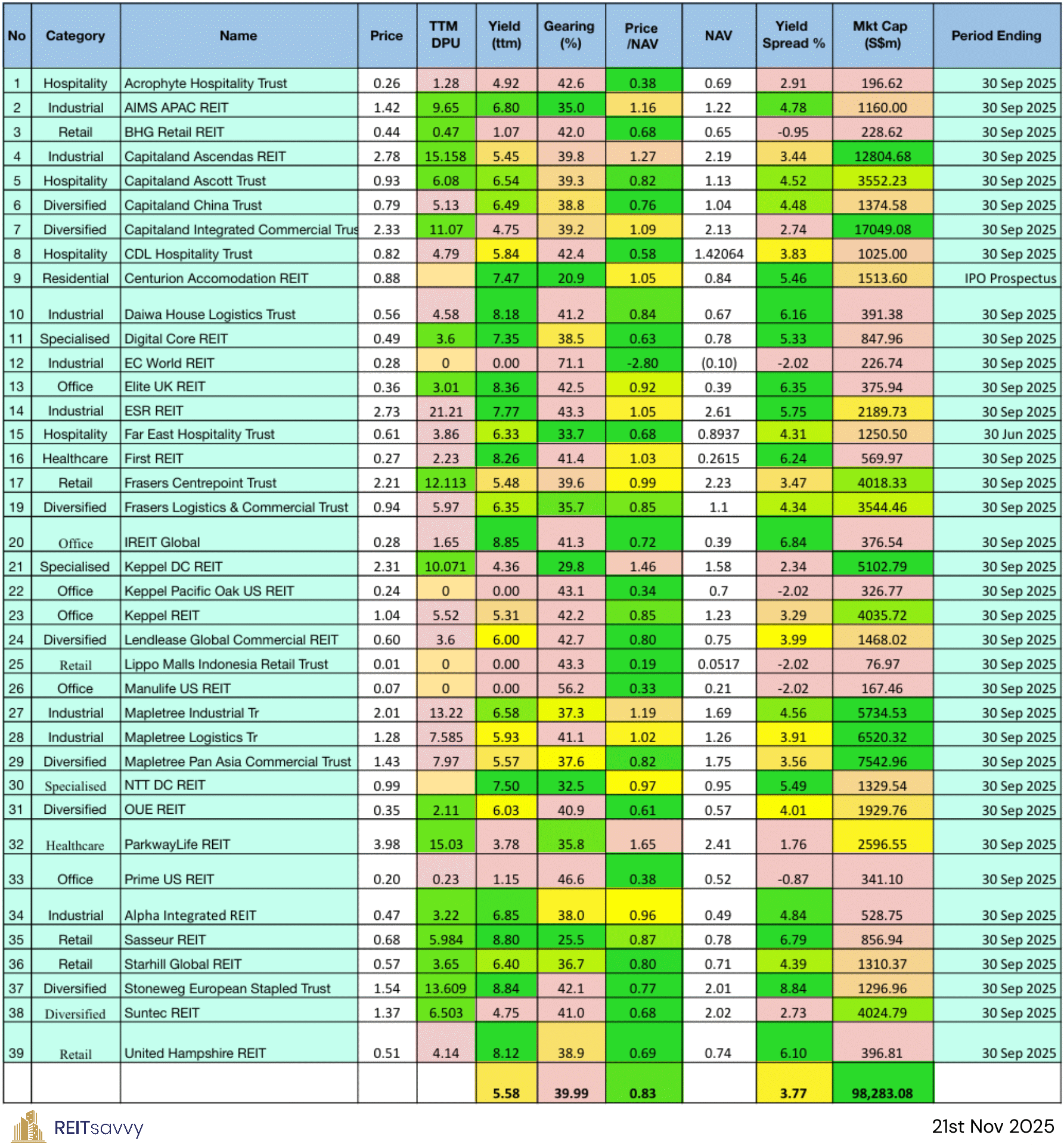
The following is the compilation of 39 Singapore REITs with colour-coding of the Distribution Yield, Gearing Ratio and Price to NAV Ratio.

  • The Financial Ratios are based on past data and these are lagging indicators.
  • All REITshave the latest Q3 2025 values, except Centurion Accommodation REIT where their values are based on their IPO Prospectuses.
  • I have introduced weighted average (weighted by market cap) to the financial ratios, in addition to the existing simple average ratios. This is another perspective where smaller market cap REITs do not disproportionately affect the average ratios. As of May 2025, I have removed EC World REIT from these calculations. 
  • I have included Centurion Accommodation REIT in this latest update, using values from the IPO Prospectus.

Data from REITsavvy Screener. https://screener.reitsavvy.com/
Blog-3

What does each Column mean?

  • FY DPU: If Green, FY DPU for the recent 4 Quarters is higher than that of the preceding 4 Quarters. If Lower, it is Red.
  • Yield (ttm): Yield, calculated by DPU (trailing twelve months) and Current Price as of November 21st, 2025.
  • Gearing (%): Leverage Ratio.
  • Price/NAV: Price to Book Value. Formula: Current Price over Net Asset Value per Unit.
  • Yield Spread (%): REIT yield (ttm) reference to Gov Bond Yields. REITs are referenced to SG Gov Bond Yield.

As of May 2024, all REITs’ Yield Spread will be referenced to SG Gov Bond Yields, regardless of trading currency.

Price/NAV Ratios Overview

  • Price/NAV decreased to 0.83 (Weighted Average: 0.99)
    • Decreased from 0.85 from October 2025 (Weighted Average was 1.01)
    • Singapore Overall REIT sector is slightly undervalued (or at fair value if weighted)
  • Most overvalued REITs (based on Price/NAV)
    ParkwayLife REIT1.65Keppel DC REIT1.46Capitaland Ascendas REIT1.27Mapletree Industrial Tr1.19AIMS APAC REIT1.16Capitaland Integrated Commercial Trust1.09EC World REIT is currently suspended and has a N.M P/NAV value.
  • Most undervalued REITs (based on Price/NAV)
    Lippo Malls Indonesia Retail Trust0.19Manulife US REIT0.33Keppel Pacific Oak US REIT0.34Acrophyte Hospitality Trust0.38Prime US REIT0.38CDL Hospitality Trust0.58

Distribution Yields Overview

  • TTM Distribution Yield increased to 5.58%. (Weighted Average increased to 5.32%
    • Increased from 5.51% in October 2025. (Weighted Average was 5.19%)
    • 11 of 37 Singapore REITs have ttm distribution yields of above 7%.
  • Highest Distribution Yield REITs (ttm)
    IREIT Global8.95Stoneweg European Stapled Trust8.93Sasseur REIT8.60Elite UK REIT8.59First REIT8.28Daiwa House Logistics Trust8.18Reminder that these yield numbers are based on current prices. 
    • Some REITs opted for semi-annual reporting and thus no quarterly DPU was announced.
    • A High Yield should not be the sole ratio to look for when choosing a REIT to invest in.
  • Yield Spread decreased slightly to 3.77%. (Weighted Average is 3.86%)   
    • Decreased from 3.91% in October 2025. (Weighted Average was 3.86%)
    • From May 2024 onwards, all my yield spread measurements are now in relation to SG Gov Bond Yields, no longer a mix with US Gov Bond Yields.

Gearing Ratios Overview

  • Gearing Ratio increased slightly to 39.99%. (Weighted Average: 37.54%)
    • Increased from 39.89% in October 2025. (Weighted Average: 37.27%)  
    • Gearing Ratios are updated quarterly. Therefore, no values changed and all values are based on the most recent Q2 2025 updates. 
    • S-REITs Gearing Ratio has been on a steady uptrend. It was 35.55% in Q4 2019.
  • Highest Gearing Ratio REITs
    EC World REIT71.1Manulife US REIT56.2Prime US REIT46.6Lippo Malls Indonesia Retail Trust43.3ESR REIT43.3Keppel Pacific Oak US REIT43.1MUST and EC World REIT’s gearing ratio has exceeded MAS’s gearing limit of 50%. However, the aggregate leverage limit is not considered to be breached if exceeding the limit is due to circumstances beyond the control of the REIT Manager.

Market Capitalisation Overview

  • Total Singapore REIT Market Capitalisation decreased by 2.81% to S$98.283 Billion.
    • Decreased from S$101.12 Billion in October 2025.
  • Biggest Market Capitalisation REITs (S$m):
    Capitaland Integrated Commercial Trust17049.08Capitaland Ascendas REIT12804.68Mapletree Pan Asia Commercial Trust7542.96Mapletree Logistics Tr6520.32Mapletree Industrial Tr5734.53Keppel DC REIT5102.79
  • Smallest Market Capitalisation REITs (S$m):
    Lippo Malls Indonesia Retail Trust76.97Manulife US REIT167.46Acrophyte Hospitality Trust196.62EC World REIT226.74BHG Retail REIT228.62Keppel Pacific Oak US REIT326.77

Disclaimer: The above table is best used for “screening and shortlisting only”. It is NOT for investing (Buy / Sell) decision. If you want to know more about investing in REITs, scroll down for more information on the REITs courses.

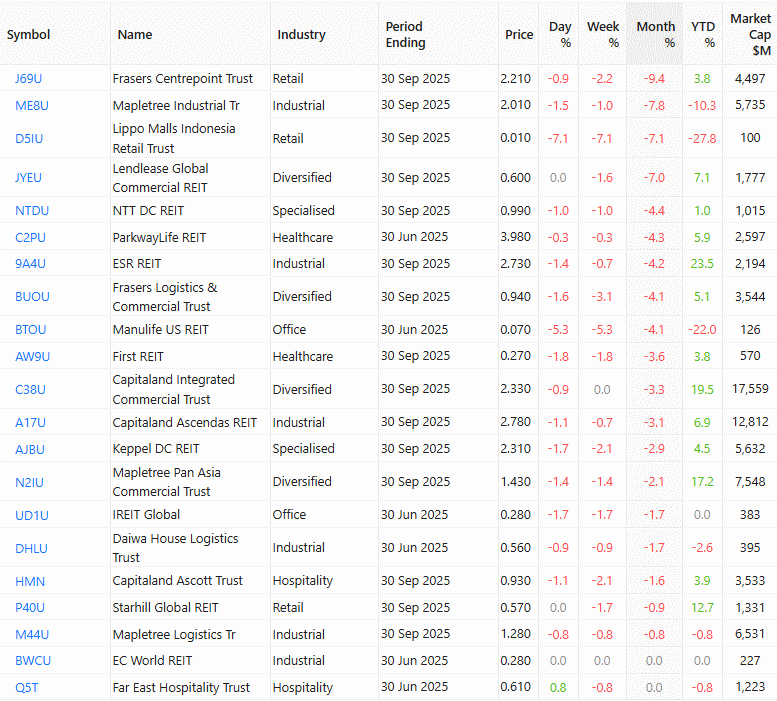
Top 10 Best/Worst Performers of October 2025

top 20-4

Refer to the Detailed 2024 S-REITs Performance Here.

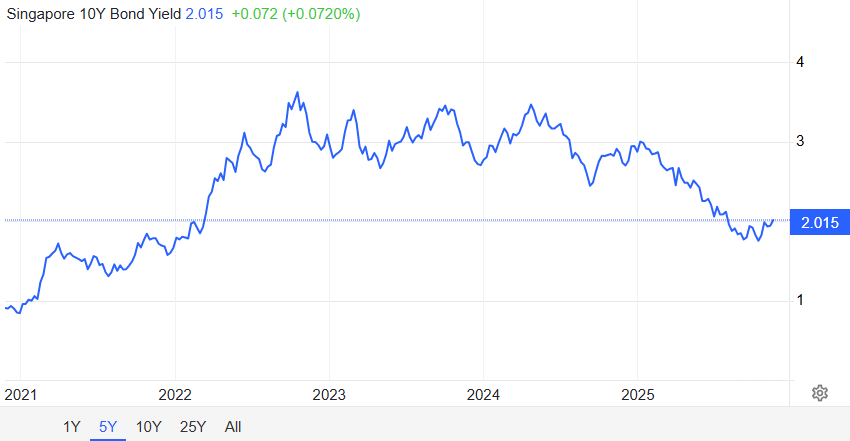
SG 10 Year Government Bond Yield

  • SG 10 Year: 2.02% (increased from 1.75%)
govbond-4

Summary


The Singapore REIT sector has broken out of its earlier consolidation zone in the mid-600s and is now trading within a higher range between 695 and 720, reflecting a clear improvement in market sentiment. This shift upward coincides with a decline in US interest rate cut, which has been a key catalyst for the sector’s rebound.

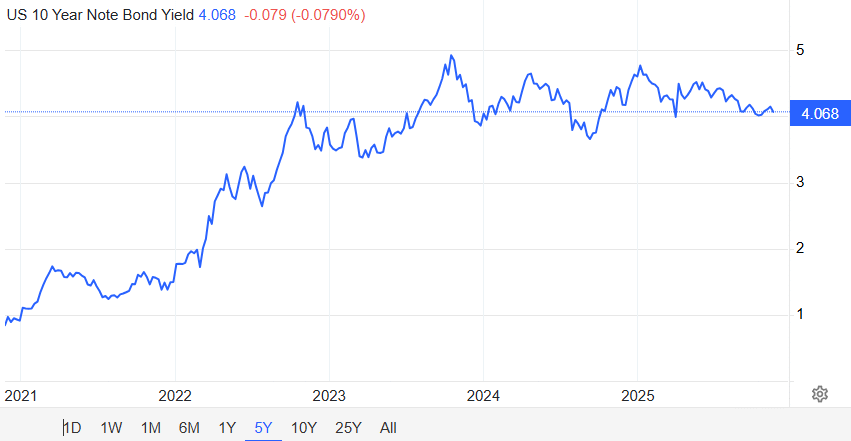
The US 10Y Treasury yield has moderated to around 4.07%, while the Singapore 10Y government bond yield has fallen to ~2.02%, marking its lowest level in more than 3½ years. These declining risk-free rates have supported higher REIT prices, although they have also contributed to yield compression, particularly among the larger-capitalisation REITs.

In terms of valuations, the simple average yield spread over the Singapore 10Y tightened slightly to 3.77%, while the market-cap weighted spread remained steady at 3.86%. The divergence suggests that larger, institutionally-favoured REITs have seen disproportionately stronger price appreciation—leading to tighter yields—compared to mid- and small-cap peers.
govbond us-3

US 10 Year Risk Free Rate

Historically, S-REIT performance has shown a strong inverse relationship with the US 10Y Treasury yield. With both US and Singapore yields trending downward over recent months, the S-REIT Index has staged a meaningful recovery from its April lows. The key question heading into Q4 2025 is whether this momentum can be sustained amid the shifting macro environment

From a valuation standpoint, the overall S-REIT sector is trading at roughly a 17% discount to fair value (slightly below fair value on a weighted-average basis), while the TTM sector yield stands at 5.58%. Though yields have compressed as prices recovered, this is a natural adjustment within a falling-rate environment.

According to the latest CME Fed Fund Futures probabilities, the market continues to price in an additional 25 bps rate cut by Q4 2025—expected within the next two weeks. A rate cut would improve distribution per unit (DPU) for REITs with shorter debt maturities and higher floating-rate exposure, though the financial impact is more likely to appear beginning in 2H 2026, after refinancing and repricing effects flow through.
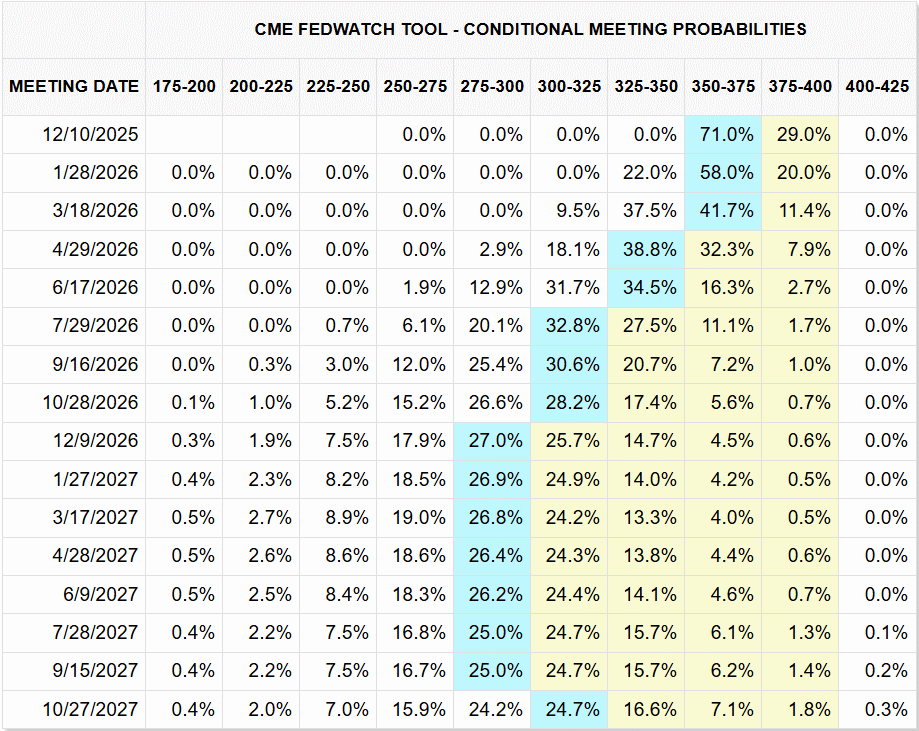
table-4

Kenny Loh is a distinguished Wealth Advisory Director with a specialization in holistic investment planning and estate management. He excels in assisting clients to grow their investment capital and establish passive income streams for retirement. Kenny also facilitates tax-efficient portfolio transfers to beneficiaries, ensuring tax-efficient capital appreciation through risk mitigation approaches and optimized wealth transfer through strategic asset structuring.

In addition to his advisory role, Kenny is an esteemed SGX Academy trainer specializing in S-REIT investing and regularly shares his insights on MoneyFM 89.3. He holds the titles of Certified Estate & Legacy Planning Consultant and CERTIFIED FINANCIAL PLANNER (CFP).

With over a decade of experience in holistic estate planning, Kenny employs a unique “3-in-1 Will, LPA, and Standby Trust” solution to address clients’ social considerations, legal obligations, emotional needs, and family harmony. He holds double master’s degrees in Business Administration and Electrical Engineering, and is an Associate Estate Planning Practitioner (AEPP), a designation jointly awarded by The Society of Will Writers & Estate Planning Practitioners (SWWEPP) of the United Kingdom and Estate Planning Practitioner Limited (EPPL), the accreditation body for Asia.

You can join his Telegram channel #REITirement – SREIT Singapore REIT Market Update and Retirement related news. https://t.me/REITirement

Continue ReadingSingapore REITs Monthly Update (November 23rd, 2025)

Money and Me: Are S-REITs Still Worth the Climb?

  • Post author:

17th Nov 2025

Industrial REITs are steady, yields are juicy, and rates are falling – so is now the moment to move?

Hosted by Michelle Martin, this episode breaks down why industrial S-REITs have held firm with strong occupancy and rental reversions.

We explore how the wider S-REIT universe has staged a 2025 rebound on easing debt costs and a friendlier rate outlook.

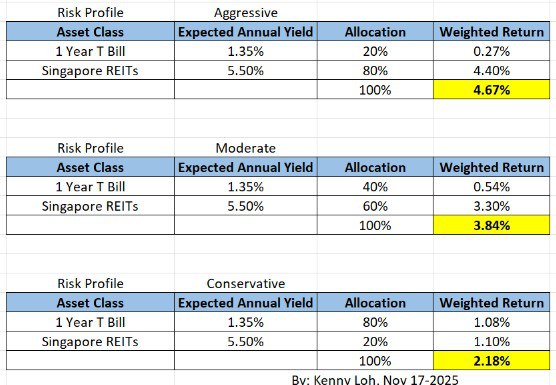
With T-bills slipping near 1.37 – 1.4%, Kenny Loh weighs in on whether REIT yields of 5 – 6% still offer real value.

Is this rally just a “rates are going down” trade – or the early innings of a broader re-rating?

Kenny also shares clear strategies for conservative investors navigating income, risk and timing.


Note: The above analysis are my own personal views and are NOT buy or sell recommendations. Investors who would like to leverage my extensive research and years of Singapore REIT investing experience can approach me separately for a REIT Portfolio Consultation.

Listen to his previous market outlook interviews here:

2025

2024

2023

2022


2021

2020

Kenny Loh is an Associate Wealth Advisory Director and REITs Specialist of Singapore’s top Independent Financial Advisor. He helps clients construct diversified portfolios consisting of different asset classes from REITs, Equities, Bonds, ETFs, Unit Trusts, Private Equity, Alternative Investments, Digital Assets and Fixed Maturity Funds to achieve an optimal risk adjusted return. Kenny is also a CERTIFIED FINANCIAL PLANNER, SGX Academy REIT Trainer, Certified IBF Trainer of Associate REIT Investment Advisor (ARIA) and also invited speaker of REITs Symposium and Invest Fair.  

You can join my Telegram channel #REITirement – SREIT Singapore REIT Market Update and Retirement related news. https://t.me/REITirement

Continue ReadingMoney and Me: Are S-REITs Still Worth the Climb?

Money and Me: S-REITs in the Spotlight — Rate Cuts, New Indices, and the Next Wave of Growth

  • Post author:

23rd Sep 2025

How could the new iEdge Singapore Next 50 Indices  reshape valuations, visibility, and investor opportunities.

Hosted by Michelle Martin, this episode dives into how the Next 50 indices could unlock liquidity, ETF flows, and future growth for S-REITs within a context of falling rates.

REIT specialist and Wealth Advisory Director, Kenny Loh breaks down the impact of falling borrowing costs and where income-focused investors should be looking now.

From Centurion Accommodation REIT’s IPO to data centres, retail, and healthcare REITs – find out which sub-sectors are set to shine.

Q&A Section

1. The launch of the iEdge Singapore Next 50 indices marks a new chapter for the mid-cap segment of the market. How are S-REITs positioned within these new benchmarks, and why do they have such significant representation?

Kenny: S-REITs represent 16 of the 50 constituents, accounting for around 44% of the iEdge Singapore Next 50 Index by weight. This prominence reflects their importance in Singapore’s market, their stable business model, and strong investor demand for defensive, income-generating assets. It also underscores Singapore’s reputation as Asia’s REIT hub, with mid-cap S-REITs fitting the liquidity and capitalization criteria for index inclusion.


2. How will being a constituent of these new indices affect a REIT’s liquidity and valuation? Will this attract new capital flows, and from what type of investors?

Kenny: Index inclusion usually improves liquidity and valuation due to greater visibility, eligibility for index-linked ETFs, and capital inflows from passive and institutional investors seeking diversified mid-cap exposure. Historically, such inclusion has drawn capital from both retail and institutional investors, as it provides new exposure with lower correlation to the STI.


3. Could these new indices boost the overall S-REIT index, given that many of the components overlap?

Kenny: Yes. With significant overlap, positive re-rating and flows into the new indices could spill over into the broader S-REIT index, supporting prices and narrowing performance gaps. Increased investor attention and fund inflows often enhance sentiment across the sector. For REIT managers, index inclusion creates measurable targets, motivating better engagement, transparency, and accountability.


4. Will these new indices lead to the creation of new investment products such as S-REIT-focused ETFs or index funds? What are the benefits and risks for retail investors?

Kenny: It’s highly likely that new ETFs or index funds will follow. The benefits include diversification, reduced single-stock risk, and easy access for retail investors. Risks include management fees, high REIT concentration, and vulnerability if interest rate cycles or the economy turn adverse. In downturns, blue-chip REITs tend to hold up better than smaller or mid-cap names.


5. How do you see the performance of the iEdge Singapore Next 50 compared to the iEdge S-REIT Index or the FTSE ST REIT Index?

Kenny: Historically, the iEdge Singapore Next 50 delivered ~5% annual returns over 10 years, lower than the S-REIT and FTSE ST REIT indices which typically outperform due to their blue-chip focus. However, year-to-date 2025, the Next 50 has outperformed the STI (25% vs 19%), driven largely by REIT strength in a falling rate environment.


Fed Rate Cut Impact

6. The U.S. Federal Reserve recently cut rates by 25 basis points. How will this impact the Singapore REIT sector?

Kenny: Lower borrowing costs improve REITs’ debt serviceability, boost DPU, and make yields more attractive compared to bonds. This should support property values, investor demand, and overall sector performance.


7. Which specific S-REITs will benefit the most?

Kenny: REITs with higher gearing, significant floating-rate debt, or near-term refinancing needs—particularly in the industrial and retail sectors—stand to benefit the most. Those with substantial Singapore-dollar borrowings may see quicker savings, as SORA tends to fall faster than U.S. interest rates.


8. With rates falling, refinancing activity is picking up. How significant is this trend, and how will it translate into higher DPU?

Kenny: It’s very significant. Refinancing at lower rates immediately improves interest coverage and frees up distributable cash, which translates into higher DPUs. That said, REITs need to weigh interest savings against the costs of early loan termination.


9. How quickly will investors see the benefits in DPU?

Kenny: Generally within the next quarterly DPU report after refinancing, with greater impact as older high-cost debt rolls off in subsequent periods.


10. The S-REIT index has recovered but still lags the broader STI. What explains this divergence, and will the gap close?

Kenny: REITs underperformed due to past rate hikes, while banks and industrial stocks drove STI gains. With U.S. 10-year yields still elevated above 4%, REITs remain cautious. But as risk-free rates decline and DPU growth resumes, the performance gap could narrow.


11. Beyond rates, how are sub-sectors like retail, office, industrial, and hospitality performing?

Kenny: Industrial and logistics REITs are strong, driven by resilient demand and limited supply. Hospitality REITs lag on weaker DPUs, while retail and office REITs have been resilient. Data center REITs are well-positioned given AI-driven demand, with more acquisitions expected as financing costs ease. In the U.S., commercial office properties may rebound as cheaper financing revives transaction activity.


Centurion Accommodation REIT IPO

12. Centurion Accommodation REIT (CAREIT) is Singapore’s first pure-play accommodation REIT. What are your thoughts on this niche focus?

Kenny: CAREIT provides exposure to purpose-built worker and student accommodation—defensive niches with stable occupancy and resilient demand. Pros: strong rental growth and predictable cash flows. Cons: regulatory risks, less diversification, and dependence on education or migrant trends.


13. CAREIT projects attractive yields of 7.47% (2026) and 8.11% (2027). How does this compare with other S-REITs?

Kenny: These yields are above the sector average of 5–6%, reflecting its niche profile and growth potential. The premium compensates for concentration risk and sector-specific exposure.


14. CAREIT’s initial portfolio spans Singapore, the UK, and Australia, backed by Centurion Corporation. How important is the sponsor’s support, and what risks come with this diversification?

Kenny: Sponsor backing is critical—it provides operational know-how, acquisition pipeline, and capital access. Geographic diversification balances local risks but introduces FX and regulatory uncertainties.


15. Considering the new indices, the Fed cut, and CAREIT’s IPO, how should investors position themselves over the next 12–18 months?

Kenny: Diversify with mid-cap and REIT-focused index ETFs, overweight S-REITs to capture refinancing and rate-cut benefits, and consider niche high-yield plays like CAREIT. This mix balances income, growth, and recovery potential in Singapore’s evolving market.

Note: The above analysis are my own personal views and are NOT buy or sell recommendations. Investors who would like to leverage my extensive research and years of Singapore REIT investing experience can approach me separately for a REIT Portfolio Consultation.

Listen to his previous market outlook interviews here:

2025

2024

2023

2022

2021

2020

Kenny Loh is an Associate Wealth Advisory Director and REITs Specialist of Singapore’s top Independent Financial Advisor. He helps clients construct diversified portfolios consisting of different asset classes from REITs, Equities, Bonds, ETFs, Unit Trusts, Private Equity, Alternative Investments, Digital Assets and Fixed Maturity Funds to achieve an optimal risk adjusted return. Kenny is also a CERTIFIED FINANCIAL PLANNER, SGX Academy REIT Trainer, Certified IBF Trainer of Associate REIT Investment Advisor (ARIA) and also invited speaker of REITs Symposium and Invest Fair.  

You can join my Telegram channel #REITirement – SREIT Singapore REIT Market Update and Retirement related news. https://t.me/REITirement
Continue ReadingMoney and Me: S-REITs in the Spotlight — Rate Cuts, New Indices, and the Next Wave of Growth